
Getting hurt in a motorcycle accident means, unfortunately, that you’re dealing with much more than trying to recover from your injuries. There’s also missed work, a damaged bike, and an insurance company that’s probably pressuring you to provide a statement. The unfortunate reality as well is that navigating the insurance and legal system is often harder for Riders than other victims of motor vehicle accidents. This is usually because of the stigma against motorcyclists, where the perception is that they are all reckless speeders who pose an increased danger on the road. As a result, insurers often assume speed or carelessness against the motorcyclist before the facts are in. Also, a rider's injuries tend to be more severe than what a car occupant walks away with.
A motorcycle accident lawyer's job is to make sure the facts, not assumptions, drive the outcome of your claim. This guide walks through what to do after a crash, why riders need a lawyer, what the Ontario data says about motorcycle safety, and how the law and your insurance policy shape what you can recover.
Key Takeaways
- Ontario riders can pursue two separate claims after a crash: accident benefits from their own insurer and a tort claim against the at-fault driver.
- OPP data shows other drivers were responsible for 54% of contributing fatal actions in multi-vehicle rider deaths over a recent 10-year period, more than the motorcyclist's share.
- The Highway Traffic Act, Insurance Act, and SABS regulation all shape how a motorcycle claim gets valued and defended.
- Helmet use and licence class (M1, M2, or full M) can become issues insurers raise to reduce a payout, even when they don't defeat a claim outright.
- The July 2026 SABS reform makes income replacement and non-earner benefits optional coverage, a direct risk for riders whose injuries often mean lost income.
What to Do After a Motorcycle Accident in Ontario
What you do in the hours and days after a crash has a direct effect on your claim later. Evidence disappears, memories fade, and insurers move fast to lock in a version of events that works in their favour. Here's what to prioritize:
- Get medical attention and report the accident to police. Go to a hospital or see a doctor right away, even if your injuries seem minor. Adrenaline masks pain, and some injuries, like internal bleeding or concussions, don't show obvious symptoms at first. A police report also creates an official record of the crash that both insurers will rely on.
- Preserve the motorcycle, helmet, and gear. Don't repair or discard your bike, helmet, jacket, or riding boots until a lawyer or expert has had a chance to inspect them. Damage patterns on your gear can help establish the point and force of impact, which matters for both liability and injury causation.
- Photograph the scene, damage, and injuries. Take pictures of the crash location, road conditions, skid marks, vehicle positions, and your visible injuries as soon as it's safe to do so. Photos taken in the moment carry more weight than a description offered weeks later.
- Notify your insurer but avoid a detailed recorded statement before legal advice. You're required to report the crash to your own insurer promptly. You're not required to provide a detailed recorded statement on the spot, and doing so before speaking with a motorcycle accident lawyer can create problems if your account differs even slightly from what the evidence later shows.
- Flag road hazard or municipal issues quickly. If a pothole, debris, poor signage, or a road defect contributed to your crash, claims against a municipality come with short notice periods, sometimes as little as 10 days. Waiting to report a hazard can eliminate that claim entirely.
- Get a free consultation before signing anything from an insurer. Don't sign a release, accept a settlement offer, or agree to an independent medical exam without understanding what you're giving up. A free consultation costs nothing and gives you a clear picture of what your claim might be worth before you commit to anything.
Why Injured Riders Need a Motorcycle Accident Lawyer in Ontario
Motorcycle claims are rarely simple, and riders face an uphill battle that car accident victims usually don't. A motorcycle accident lawyer's role is to build the case insurers can't easily dismiss.
The Two-Track Claim: Accident Benefits and a Tort Claim
After a motorcycle crash, you may have two separate claims running at the same time: an accident benefits claim against your own insurer, and a tort claim against the driver who caused the crash. The two work differently, as the table below shows.
|
Accident Benefits Claim |
Tort Claim |
|
|
Claim is against |
Your own auto insurer |
The at-fault driver |
|
Fault required? |
No, it's a no-fault system |
Yes, in most cases |
|
What it covers |
Medical and rehab costs, income replacement, attendant care |
Pain and suffering, income loss beyond benefits, other damages |
|
Governed by |
Statutory Accident Benefits Schedule (SABS, O. Reg. 34/10) |
The Insurance Act and common law |
These two claims involve different insurers, different forms, and different deadlines, and mistakes on one can affect the other. A lawyer coordinates both tracks so nothing falls through the cracks.
When a Lawyer Matters Most
Not every fender bender needs a lawyer, but certain situations call for one immediately. These include serious or permanent injuries, a dispute over who caused the crash, an insurer denying or cutting off your benefits, a fatality in the family, or a crash involving a commercial vehicle like a delivery truck or transport trailer. In each of these situations, the stakes are higher, the insurer's resistance tends to be stronger, and the value of experienced legal representation grows accordingly.
A Free Consultation No Matter How the Crash Happened
Whether you were rear-ended at a red light, cut off by a left-turning driver, or involved in a single-vehicle crash after swerving to avoid a hazard, you're entitled to a free consultation to find out where you stand. Riders sometimes assume that if they were partly at fault, there's no point calling a lawyer. That's rarely true. Ontario's accident benefits system doesn't require you to be fault-free, and a tort claim can still proceed even where fault is shared.
What Makes Strype the Best Motorcycle Accident Lawyer for a Serious Injury Claim
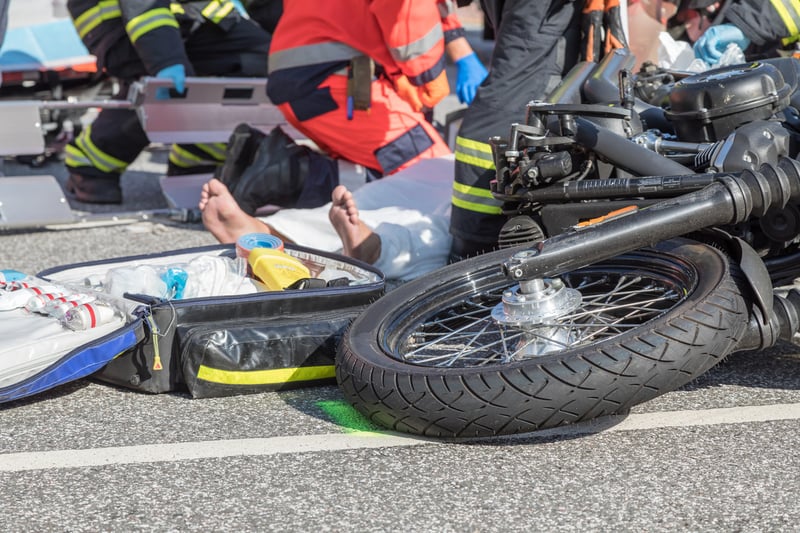
Not all personal injury firms are built to handle catastrophic motorcycle injury claims. Here's what sets Strype Injury Lawyers apart for riders dealing with a serious crash.
A Contingency Fee Agreement
Strype works on a contingency fee basis, meaning you pay nothing upfront and owe no legal fee unless your claim results in a settlement or court award. This removes the financial barrier that keeps many injured riders from getting proper legal representation when they need it most.
Anti-Mill Positioning: Partner-Level Attention
Strype isn't a high-volume settlement mill that processes files on autopilot. The firm takes an anti-mill approach, meaning your case gets direct attention from experienced litigators rather than being passed between junior staff and treated as a number on a spreadsheet.
Financial Horsepower for Expert Evidence
Serious motorcycle injury claims often depend on expert evidence, accident reconstructionists, neurologists, orthopedic surgeons, and vocational experts, and that evidence isn't cheap. Strype advances more than $50,000 in expert costs at the firm's own risk when a case calls for it, so your claim isn't limited by what you can personally afford to spend building it.
A Certified Specialist in Civil Litigation
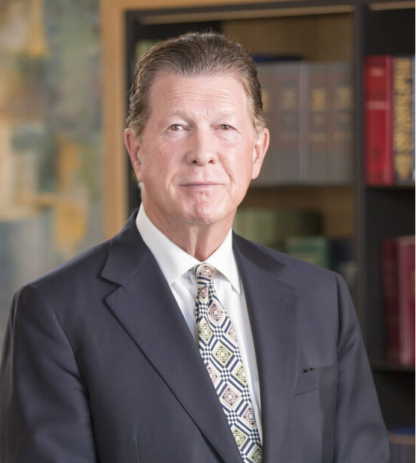
Founding partner Jeffrey Strype holds the Law Society of Ontario's Certified Specialist in Civil Litigation designation, a credential held by a small percentage of Ontario lawyers. Combined with more than 45 years of experience and over 250 trials, that background gives riders access to a level of courtroom-tested judgment that most firms simply don't have.
Motorcycle Accidents in Ontario: The Numbers Behind the Risk
Motorcycle crash data from the Ontario Provincial Police paints a clear picture of where the risk actually comes from, and it often runs counter to public assumptions about who's usually at fault.
Fault Distribution in Multi-Vehicle Fatalities
Over a 10-year window from 2014 to 2023, OPP collision data on multi-vehicle crashes resulting in a rider fatality shows where responsibility and risk most often fall. The table below breaks down the key figures.
|
Metric |
Finding |
|
Contributing fault attributed to the other driver |
54% |
|
Contributing fault attributed to the motorcyclist |
46% |
|
Fatal crashes on provincial highways |
38% |
|
Fatal crashes directly linked to intersections |
30% |
|
Fatal crashes involving alcohol or drug impairment |
17% |
In other words, in fatal multi-vehicle collisions, the other driver was more often the one whose actions contributed to the crash. OPP investigators point to four factors that together contribute to more than half of all fatal motorcycle crashes:
- Excessive speed
- Failure to yield the right-of-way
- Driver inattention
- Loss of control
Highway corridors and intersections remain the two settings where fatal crashes concentrate, and impaired driving continues to be a factor investigators see repeatedly. None of this is information most riders have on hand after a crash, which is part of why an experienced lawyer's grasp of the data matters when negotiating with an insurer.
Government and Policy Action
After 2024 was recorded as the deadliest year for motorcyclists in Ontario in two decades, OPP Commissioner and Ontario's Minister of Transportation announced a set of targeted countermeasures aimed at reducing rider deaths.
On the enforcement side, the OPP expanded aerial surveillance on major corridors, including Highway 401, specifically to target aggressive driving and street racing. On the legislative side, the province committed to stricter, zero-tolerance enforcement of impaired driving rules and mandatory roadside licence suspensions for stunt driving under the Highway Traffic Act. For riders, these measures signal that regulators recognize the scale of the problem, but they don't undo the harm already caused by a driver's negligence. That's where a legal claim comes in.
Common Injuries Seen by a Motorcycle Accident Injury Lawyer
Motorcycle crashes tend to produce injuries that are more severe and longer-lasting than those seen in typical car accidents, largely because riders have no metal frame absorbing the impact on their behalf. The injuries a motorcycle accident injury lawyer sees most often include:
- Traumatic brain injury (TBI)
- Spinal cord injury and paralysis
- Fractures, particularly to the legs, arms, and pelvis
- Road rash and severe burns
- Amputations
- Internal organ injuries
- Post-traumatic stress disorder (PTSD) and other psychological injuries
It's a mistake to assume that a low-speed crash means minor injuries. Riders have been catastrophically injured in parking lot collisions and slow-speed intersection crashes, because the mechanism of injury for a motorcyclist has more to do with the fall, the impact surface, and what the body strikes than with how fast the bike was travelling. A thorough medical evaluation matters regardless of how the crash looked from the outside.
The Ontario Law That Shapes a Motorcycle Accident Claim
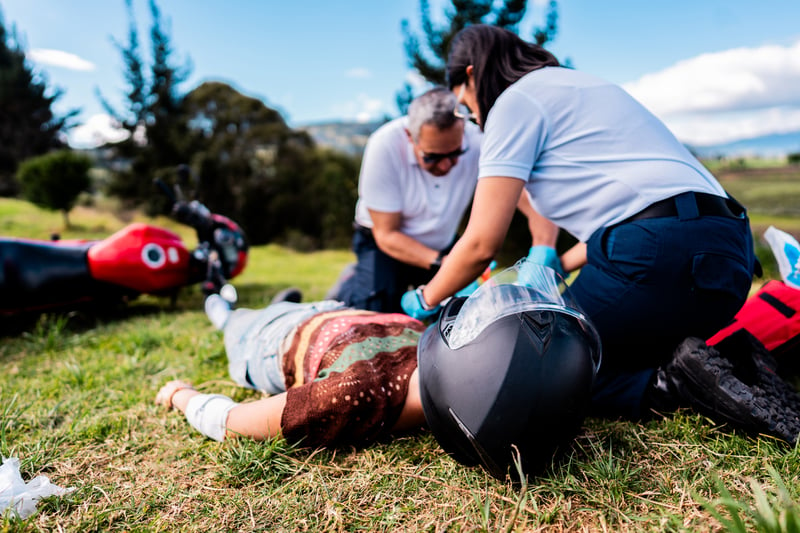
Three pieces of legislation govern how a motorcycle accident claim gets investigated, defended, and valued in Ontario:
- The Highway Traffic Act, which sets the rules of the road and determines fault in most collisions.
- The Insurance Act, which governs how auto insurance policies and no-fault benefits operate in Ontario.
- The Statutory Accident Benefits Schedule (SABS), found in Ontario Regulation 34/10, which sets out the no-fault benefits available to injured riders.
Fault in a motorcycle crash is rarely obvious from a single account of what happened. Investigators and motorcycle accident lawyers look at vehicle positioning at the moment of impact, sightlines and obstructions, lane markings, available video footage from traffic or dashboard cameras, and witness statements to reconstruct what actually occurred. Because riders are smaller and less visible than cars, drivers frequently misjudge a motorcycle's speed and distance, which is where many of the disputes in these claims begin.
Left-Turn and Lane-Change Collisions
Left-turn and lane-change crashes are among the most common types of motorcycle collisions, and Ontario law is specific about who bears responsibility in these situations. Section 141 of the Highway Traffic Act governs turns across oncoming traffic, section 142 addresses signalling requirements, and section 154 governs lane movement. A driver who turns left in front of an oncoming motorcycle, or who changes lanes without checking for a rider in a blind spot, is typically found at fault. The common driver defence, “I didn't see the motorcycle,” generally doesn't hold up well in these cases. Ontario courts have consistently held that a driver's duty to keep a proper lookout includes motorcycles, and a failure to see a rider who was there to be seen tends to undermine rather than support the driver's position.
No-Contact Motorcycle and Ebike Accident Claims
You don't need physical contact between vehicles to have a valid claim. If another driver's careless movement, a sudden lane change, an abrupt stop, or an unsafe turn, forced you to swerve, brake hard, or lose control, you may still have a claim against that driver even though the vehicles never touched. These no-contact claims depend heavily on evidence like witness accounts, dashcam or traffic camera footage, skid marks, and damage to your gear that's consistent with your version of events. The same right-of-way analysis that applies to motorcycles extends to ebike and bicycle riders, who face similar visibility and vulnerability issues on Ontario roads.
Helmet Law and Its Effect on a Motorcycle Accident Injury Lawyer's Strategy
Ontario law requires every motorcycle rider and passenger to wear an approved helmet under section 104 of the Highway Traffic Act, with specific standards set out in Regulation 610, including proper fit and a secured chin strap. A missing or improperly worn helmet doesn't automatically defeat a personal injury claim, but it can matter significantly in cases involving brain or facial injuries, since an insurer may argue that proper helmet use would have reduced the severity of those specific injuries.
This is why a motorcycle accident injury lawyer treats a damaged helmet as important physical evidence. The condition of the helmet, the location of the impact damage, and whether it was properly fastened at the time of the crash can all become relevant to both liability and the extent of compensation. Never discard a damaged helmet after a crash, even if it looks unusable. It should be preserved exactly as it was left after the collision.
M1, M2, and Full M Licence Issues in a Motorcycle Claim
Ontario's graduated licensing system for motorcycles includes M1, M2, and full M licence stages, each with its own restrictions under Ontario Regulation 340/94. M1 riders, in particular, face several limits that fully licensed drivers don't:
- No carrying passengers
- No riding on highways with speed limits over 80 km/h
- No riding between midnight and 5 a.m.
- Zero tolerance for alcohol before riding, stricter than the standard limit for licensed drivers
Insurers sometimes look closely at a rider's licence class after a crash, particularly when the rider was still in the M1 or M2 stage. If a rider was violating a licensing restriction at the time of the crash, an insurer may try to argue contributory negligence, meaning the rider's own conduct partly caused or worsened the outcome, in an effort to reduce what they owe. Whether that argument actually holds up depends heavily on the specific facts and how the restriction connects to how the crash happened. This is exactly the kind of issue an experienced motorcycle accident lawyer knows how to push back on.
Accident Benefits for Motorcycle Riders Under the SABS
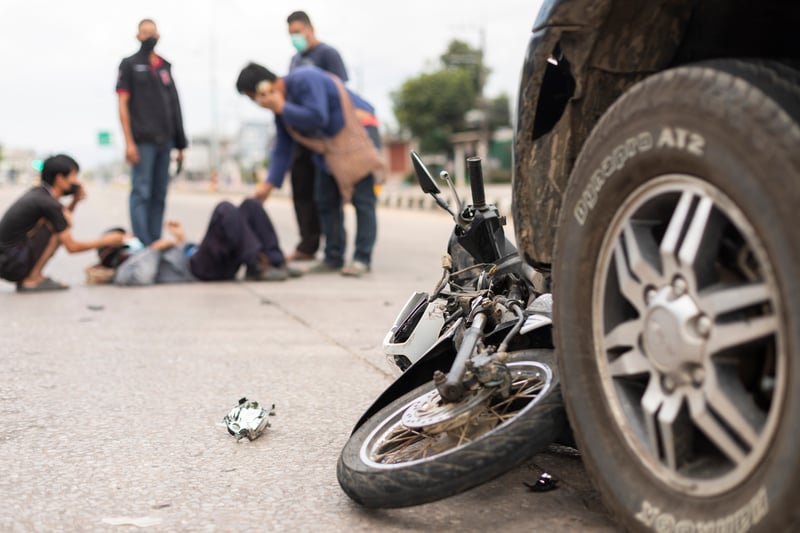
Ontario's SABS provides no-fault benefits to injured riders, meaning you can access these benefits regardless of who caused the crash, even if you were partly responsible yourself. These benefits are paid by your own auto insurer and are separate from any tort claim against an at-fault driver.
SABS benefits generally fall into these categories:
- Medical and rehabilitation benefits
- Attendant care benefits
- Income replacement benefits
- Non-earner benefits
- Assistive devices
- Case management services
How the July 2026 SABS Reform Changes Accident Benefits for Riders
In July of 2026, Ontario's accident benefits system got a big change. Medical, rehabilitation, and attendant care benefits will remain mandatory parts of every auto insurance policy, but income replacement and non-earner benefits are now optional coverage that drivers and riders must actively purchase before a crash happens, rather than benefits that come standard.
This is a direct risk for motorcyclists specifically. Motorcycle injuries are frequently severe enough to cause extended time away from work, sometimes permanently, which makes income replacement one of the most important benefits a rider can have. If you didn't purchase that optional coverage before your policy renewal and you're seriously hurt after July 2026, you may find yourself without income replacement benefits at exactly the moment you need them most. Every rider should take a few concrete steps before their policy renews:
- Pull your current policy and check whether income replacement and non-earner benefits are already included.
- Talk to your broker or insurer about the cost of adding optional income replacement coverage if it isn't already there.
- Set a reminder ahead of your renewal date so the decision doesn't get missed before your policy locks in for another term.
Conclusion: Talk to a Motorcycle Accident Lawyer Before You Talk to the Insurance Company
Whether you're riding in Toronto, Ottawa, Hamilton, Brampton, Mississauga, Windsor, London, Oshawa, or Niagara Falls, the law that applies to your crash and the tactics insurers use to minimize your claim are largely the same across Ontario. What changes the outcome is having a lawyer who understands both the medicine and the law well enough to build a claim that reflects what actually happened to you.
Strype Injury Lawyers has spent more than 45 years and 250 trials proving that insurers pay more when they know a firm is genuinely prepared to fight for its clients. As a motorcycle accident lawyer, our approach combines in-house medical expertise, the financial resources to fund your case properly, and Jeffrey Strype's certified specialist experience in civil litigation, all on a contingency fee basis that costs you nothing upfront.
If you or a family member has been injured in a motorcycle accident, don't sign anything or give a detailed statement to an insurance company before you understand your rights.
Get a free, no-obligation case evaluation with Strype Injury Lawyers today. Don't talk to them. Talk to us.
Legal Disclaimer: The information in this article is intended for general educational purposes only and does not constitute legal advice. Every personal injury claim is unique, and the facts of your situation may affect your legal rights and options. If you have been injured or believe you may have a legal claim, contact a qualified personal injury lawyer in Ontario as soon as possible.

Personal Injury Lawyers