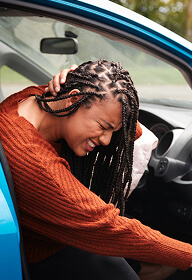

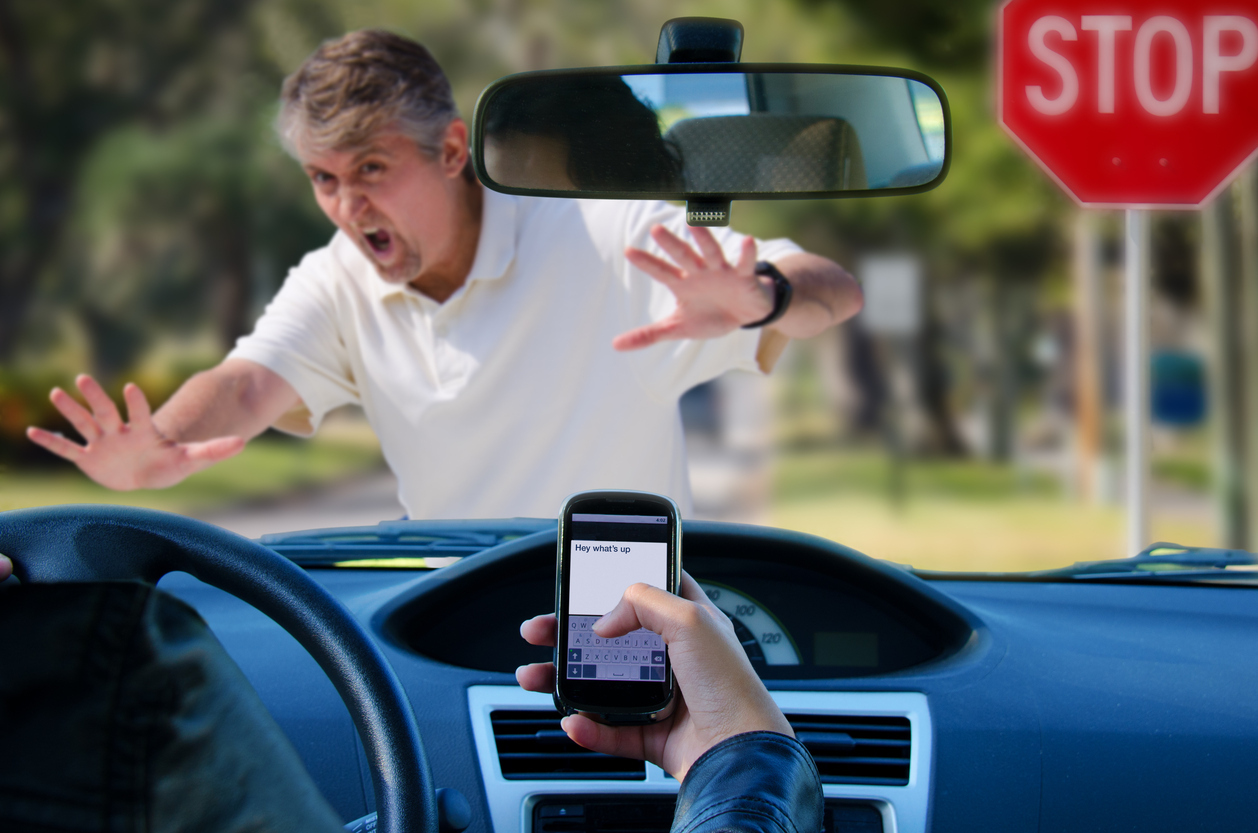
Every day on the 400-series highways, the DVP, and the streets of North York, drivers glance down at a screen just for a few seconds. Those few seconds of not looking at the road may not seem like a big deal, but it’s enough time to cause a serious accident. Distracted driving has become one of the most significant causes of serious collisions in Ontario, and the consequences for victims can be devastating: broken bones, traumatic brain injuries, chronic pain, lost income, and a long, uncertain road to recovery—sometimes to a life that will never be the same as it was before.
If you've been hurt in a collision caused by a distracted driver, you're probably overwhelmed. Insurance adjusters are calling. Bills are piling up. And you may feel small against a system that seems designed to minimize what happened to you. You don't have to face that system alone. A distracted driving accident lawyer can level the playing field by gathering evidence, proving fault, and fighting for the full compensation you need to rebuild your life.
At Strype Injury Lawyers, we've spent over 46 years in Ontario's courts advocating for victims of negligence. We know how distracted driving cases work, what insurers look for, and how to make sure the evidence tells the truth about what really happened. Here's what you need to know.
Key Takeaways
- Distracted driving is now a leading cause of road fatalities in Ontario, often surpassing impaired driving.
- Ontario's Highway Traffic Act imposes escalating fines, demerit points, and licence suspensions for distracted drivers, and a conviction affects insurance premiums significantly.
- Proving distracted driving requires specialized evidence like cell phone records, dashcam footage, and accident reconstruction—expertise that matters in a legal claim.
- Starting July 1, 2026, key SABS auto insurance benefits will become optional. Checking your policy now could protect your income and caregiving support if you're ever hurt on the road.
- Strype Injury Lawyers works on a contingency basis, which means you pay nothing unless we win.
What Is Distracted Driving?
Distracted driving is the act of operating a motor vehicle while engaged in any secondary activity that takes attention away from the primary task of driving. That could mean removing your eyes from the road to look at your phone, taking your hands off the steering wheel to grab your Tim Horton’s coffee and take a bite of your honey cruler, or your mind not being focused on driving because you’re too tired. Under Ontario's Highway Traffic Act, distracted driving also includes using a hand-held device, texting, viewing unrelated display screens, and programming a GPS while the vehicle is in motion.
Facts About Distracted Driving in Canada and Ontario
Before examining the legal consequences, it's important to understand the scale of the problem. The statistics speak for themselves:
- Prevalence: Nearly 8 in 10 Canadian drivers have admitted to engaging in distracted behaviours behind the wheel at some point.
- Risks of Texting: Sending or reading a text takes your eyes off the road for a minimum of 5 seconds, which is the equivalent of driving the length of a football field at 88.5 km/h without looking.
- Phone Usage: Using a phone while driving makes you 4 times more likely to be in a collision. Texting specifically makes you 23 times more likely to crash.
- Economic Cost: Distracted driving contributes to approximately 4 million vehicle collisions annually across North America.
- Ontario Collisions: The Government of Ontario tracked that over 30,000 collisions in 2022 involved distracted or inattentive drivers, resulting in nearly 11,000 injuries and 100 fatalities provincewide.
- Ontario Fatalities Trending Up: The OPP reported 82 deaths on Ontario highways due to distracted driving in 2024—a 43% increase from 57 deaths in 2023, and the highest toll in six years.
- Every Half Hour: On average, one person in Ontario is injured in a distracted driving collision every 30 minutes.
- Economic Cost: Distracted driving contributes to approximately 4 million vehicle collisions annually across North America.
These aren't abstract numbers. Behind every statistic is a real person who was struck by a driver who made the choice, even if it was only for a moment, to look away. That choice has real legal consequences, and so does the harm it causes to innocent people on Ontario's roads.
The Three Types of Distracted Driving
Researchers and traffic safety experts categorize distracted driving into three distinct types. Understanding these categories matters in a legal context because they affect how liability is established:
- Manual Distraction: Taking one or both hands off the wheel—for example, reaching for a bag, eating, or holding a phone. This type often leaves physical evidence (dashcam footage, witness accounts).
- Visual Distraction: Taking your eyes off the road—looking at a GPS screen, glancing at a passenger, or reading a notification. Even a two-second visual distraction significantly increases collision risk.
- Cognitive Distracted Driving: Taking your mind off the task of driving—daydreaming, engaging in an emotionally intense conversation, or mental fatigue. This is the hardest type to prove but it's real and measurable through accident reconstruction.
Many distracted driving incidents involve all three types simultaneously. Texting while driving, for instance, is manual, visual, and cognitive all at once, which is why research consistently shows it to be among the most dangerous behaviours behind the wheel. A 2024 survey also revealed that most Ontarians view distracted driving as a bigger threat to road safety compared to impaired driving.
What Percentage of Collisions Involve Distracted Driving?
In Ontario, distracted driving contributes to approximately 17% of reported, non-fatal crashes and accounts for roughly 15% of all road fatalities in the province. According to the Ontario Provincial Police (OPP), distracted driving has, in recent years, surpassed impaired driving as the number one cause of fatal collisions on provincial roads—and 2024 national data indicates that distracted driving now accounts for over 20% of fatal collisions in Canada, with rates continuing to trend upward.
Fatal accidents involving distraction have doubled since 2000. That's not a coincidence, rather it's the direct result of the explosion in smartphone use and the normalization of multi-tasking behind the wheel. Ontario roads are safer in many ways than they were decades ago, but distracted driving remains a stubborn exception to that trend.
Legal Framework: Distracted Driving Law in Ontario
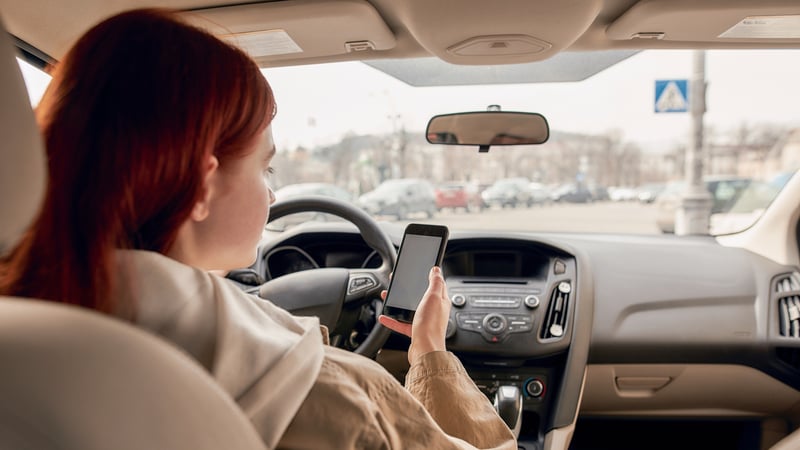
Ontario's legal framework for distracted driving operates on two tracks that are directly relevant to injury victims.
- The first is the provincial penalty system under the Highway Traffic Act, which includes fines, demerit points, and licence suspensions that apply to the at-fault driver.
- The second is how those penalties intersect with your civil claim: a driver who has been charged or convicted of a distracted driving offence is a driver whose negligence is already on the record.
Understanding both tracks, and how they work together, is essential if you've been hurt in a collision caused by an inattentive driver.
Distracted Driving Laws: Highway Traffic Act Penalties
Under Section 78(1) of the Highway Traffic Act, it is illegal to hold or use a hand-held wireless communication device, view non-driving-related display screens, or program a GPS by hand while operating a motor vehicle—even when stopped at a red light. The law applies to all drivers, including novice drivers on G1, G2, M1, and M2 licences.
|
Offence |
Fine |
Demerit Points |
Suspension |
Notes |
|
1st Conviction |
$615–$1,000 |
3 points |
3 days |
|
|
2nd Conviction |
Up to $2,000 |
6 points |
7 days |
|
|
3rd+ Conviction |
Up to $3,000 |
6 points |
30 days |
|
|
Novice (G1/G2) 1st |
Same as above |
No points |
30 days |
May lose licence on 3rd |
Beyond these base penalties, a distracted driver who causes a collision may also face careless driving charges under the Highway Traffic Act or, in severe cases, criminal dangerous driving charges under the Criminal Code of Canada. Careless driving causing bodily harm or death carries the possibility of imprisonment. These escalating charges are directly relevant to your civil claim: a finding of careless or dangerous driving by a court significantly strengthens the negligence case your lawyer builds on your behalf.
Does Distracted Driving Increase Insurance?
A distracted driving conviction in Ontario is classified as a major driving infraction. Insurers treat it similarly to impaired driving convictions when assessing risk, which means your premiums can increase dramatically, often by 25% or more at renewal, and some carriers will non-renew your policy outright.
From a victim's perspective, when you pursue a tort claim against a distracted driver, their driving record and insurance history can be relevant to establishing fault and negotiating your settlement. A driver with a prior distracted driving conviction or a pattern of risky behaviour presents stronger evidence of negligence. In some cases, a prior conviction can also support a claim for aggravated damages, particularly where an insurer's conduct has been unreasonable.
It's also worth noting that Ontario's insurance system requires your own insurer to pay your accident benefits (SABS) regardless of who was at fault—but collecting full compensation for your injuries, lost income, and suffering from the at-fault driver requires a separate tort claim. This is exactly why having a lawyer matters.
The 2026 SABS Reform Alert: Check Your Policy Before July 1, 2026
If you drive in Ontario, this section may be the most important thing you read this year.
As of July 1, 2026, the Ontario government's changes to the Statutory Accident Benefits Schedule (SABS) will take effect. Under these reforms, two benefits that were previously mandatory for all Ontario auto insurance policies will become optional add-ons:
- Income Replacement Benefits, which provide partial income replacement if you're unable to work due to injuries from a collision.
- Caregiver Benefits, which cover the cost of caregiving support if your injuries prevent you from caring for a dependent.
If you don't specifically purchase these optional benefits before a collision occurs, you may not be entitled to them regardless of how seriously you're injured or how disrupted your life becomes. For commuters and working Ontarians who depend on their income, the stakes of this reform are enormous.
Check your insurance policy now. Call your broker or insurance company directly and ask, "Do my current benefits include income replacement and caregiver support?" If they're not explicitly included, talk to them about adding these benefits before the July 1, 2026 deadline. Don't wait until after a collision to find out what you don't have.
The Path to Recovery: Why Hire a Distracted Driving Accident Attorney?
Hiring a distracted driving accident lawyer gives you the investigative resources, legal expertise, and courtroom credibility to go up against an insurance system that is built to minimize your claim. A lawyer can subpoena cell phone records, retain accident reconstruction experts, navigate the SABS benefits process, and build a tort claim against the at-fault driver—all while you focus on recovering.
The "Lawyer's Lawyer" Advantage: Partner-Level Attention
Not all personal injury firms are built the same. High-volume settlement mills process hundreds of files simultaneously, often settling quickly and quietly to keep the pipeline moving. The problem with quick settlements is that they're rarely full settlements, especially in cases involving serious injuries with long-term consequences.
At Strype Injury Lawyers, we're the firm other lawyers refer their most complex files to when they don't have the resources to litigate. With over 250 trials to our name and 46 years of experience in Ontario courts, we don't settle because it's convenient—we settle when the number is right. And if it isn't right, we go to trial. That reputation alone changes how insurers respond to our clients' claims.
How to Prove Distracted Driving: The Technical Evidence That Wins Cases
One of the biggest challenges in distracted driving claims is actually proving distraction. The at-fault driver isn't going to admit to texting. That's where the technical evidence comes in, and where having the right legal team makes all the difference. Here's what we pursue:
|
Evidence Type |
What It Is |
Why It Matters |
|
Cell Phone Records |
Subpoenaed wireless carrier records including call logs, text timestamps, and data usage |
Places a phone in active use at the precise moment of the collision |
|
Camera and Dashcam Footage |
Intersection camera footage, dashcams from your vehicle or nearby traffic, and business surveillance |
Can visually confirm a driver was looking at a device at the moment of impact |
|
Witness Testimony |
Accounts from passengers in other vehicles, pedestrians, and bystanders who observed the driver before the crash |
Powerful corroborating evidence that supports physical and digital findings |
|
Accident Reconstruction |
Specialists who analyze collision physics, braking patterns, and impact angles |
Determines whether the driver's reaction time is consistent with distraction — decisive at trial or in settlement negotiations |
Evidence can disappear quickly. Surveillance footage can get overwritten, and phone records can become harder to access the more time that passes. That's why it's critical to contact a distracted driving accident lawyer as soon as possible after a collision. Because the earlier we can act, the stronger the case we can build.
Prevention and Safety: How to Stop Distracted Driving
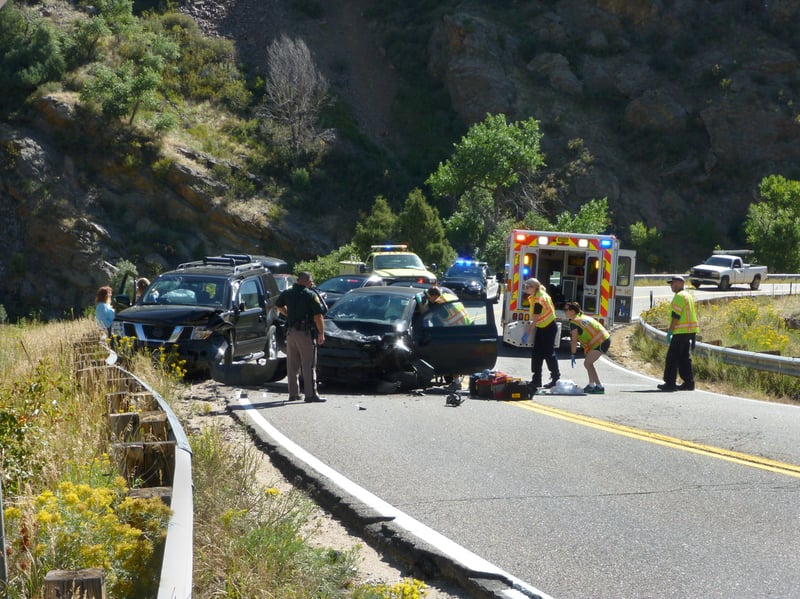
Whether you're a daily commuter on the 401 or a parent driving your child to school everyday, building better habits behind the wheel protects everyone. Here are practical, evidence-backed strategies for Ontario drivers:
- Before you drive: Program your GPS, set your playlist, and adjust your mirrors before pulling out of the driveway. If you're using a navigation app, enter your destination while parked. Not at a red light, and not while rolling through a quiet street. A few minutes of preparation before you leave eliminates the temptation to adjust on the go, and it costs far less time than most drivers expect. Think of it as part of the drive, not a delay before it.
- Activate Do Not Disturb mode: Both iOS and Android offer driving modes that suppress notifications and auto-reply to incoming messages, and some activate automatically once your phone detects vehicle speed. If you haven't set yours up yet, it takes about two minutes in your phone's settings. Use it every time. The pull of a notification is psychological—if your phone stays silent, you're far less likely to reach for it. The message can wait; the road can't.
- Use a "designated texter": If you're travelling with a passenger, make them your point of contact. They can read messages aloud, respond on your behalf, manage navigation prompts, and field calls, turning what would otherwise be a distraction into a shared responsibility. If you're driving alone, let calls go to voicemail and respond when you've arrived or pulled over safely.
- Put your phone out of reach: In the glove compartment, in the back seat, in your bag, basically anywhere it's not within arm's reach is meaningfully safer. Research consistently shows that the mere presence of a phone on the seat or cupholder increases the temptation to check it, even when notifications are silenced. Out of sight genuinely means out of mind. If you're finding it hard to resist, treat putting your phone away as part of your pre-drive routine, the same way you'd buckle your seatbelt.
- Pull over safely: If a call or text genuinely can't wait, safely exit the road and park in a legal spot before picking up your phone. A parking lot, a side street, or a designated rest area are all appropriate options. Under Ontario law, simply being stopped at a red light does not exempt you from distracted driving charges; you must be lawfully parked off the roadway. It’s also important to note that stopping on the shoulder of a 400-series highway is prohibited in Ontario except in a genuine emergency such as a vehicle breakdown or medical crisis.
- Talk to your teen: A CAMH survey of licensed Ontario high school students found that more than one in three admitted to texting while driving, rising to nearly half of Grade 12 students specifically. Although this survey has older data, it does highlight a trend where younger drivers are consistently overrepresented in distracted driving data. The consequences for distracted driving under Ontario's graduated licensing system are severe: a G1 or G2 driver who accumulates a third distracted driving conviction loses their licence entirely and must restart the licensing process from scratch. If there's a new driver in your household, the conversation about distracted driving is worth having early and often.
- Use your vehicle's built-in technology correctly: Modern vehicles increasingly offer hands-free calling, voice-activated controls, and driver assistance features designed to reduce manual interaction. These are tools worth learning, but only in their genuinely hands-free form. Programming a built-in GPS while moving, or scrolling through a touchscreen infotainment system, carries the same risk as using a phone. Set it before you drive, and use voice commands where possible once you're in motion.
Restoring Dignity: Talk to a Distracted Driving Accident Lawyer Today
A collision caused by a distracted driver doesn't just injure your body, it disrupts your income, your independence, and your sense of safety on the road. You weren't careless. You were simply in the wrong place when someone made the wrong choice. You deserve more than a quick settlement that undervalues your situation and leaves you without the resources to cover long-term care, rehabilitation, or lost earning capacity.
The right legal team will investigate the collision, preserve critical evidence, retain the experts needed to prove fault, and fight for the full compensation you're entitled to under Ontario law, including income replacement, attendant care, pain and suffering damages, and future care costs if your injuries are serious.
At Strype Injury Lawyers, we've been doing exactly that for over four decades. We've stood in more than 250 courtrooms across Ontario. We've taken on the biggest insurers in the country and refused to back down. We work on a contingency fee basis, which means if we don’t win, you don’t pay, and we fund your expert costs upfront so you never have to fight with one hand tied behind your back.
If you or someone you love has been injured by a distracted driver in Ontario, don't talk to the insurance company before you talk to us.
Don't talk to them. Talk to us.
Contact Strype Injury Lawyers today for a free, no-pressure case evaluation. There's no obligation—just the answers you need to make the right decision for yourself and your family.
Legal Disclaimer: The information in this article is intended for general educational purposes only and does not constitute legal advice. Every personal injury claim is unique, and the facts of your situation may affect your legal rights and options. If you have been injured or believe you may have a legal claim, contact a qualified personal injury lawyer in Ontario as soon as possible.

Personal Injury Lawyers